
Geography: Grade 10 8 Sections26 Lessons365 Days
1.1. Overview of the World Land Forms
Overview of World Land Forms
Geography Grade 10
Lesson Competencies
At the end of the lesson you will be able to:
Define what landforms are and identify major and minor types.
Explain how internal and external processes create landforms.
List the seven continents and five oceans.
Describe coastal features like islands, peninsulas, and isthmuses.
Differentiate between mountains, plains, and plateaus.
Key Terms
Landform
A physical feature on the Earth’s surface that forms the terrain of an area.
Tectonic Plate
Massive, irregularly shaped slab of solid rock that makes up the Earth’s lithosphere.
Erosion
The process by which water and wind wear away land and move it to another location.
Peninsula
A piece of land that has water on three sides but is connected to the mainland.
Isthmus
A narrow strip of land with water on both sides, connecting two larger pieces of land.
Plateau
A large area of raised land that is flat on top.
Video Lesson
Core Lesson: Exploring Earth’s Terrain
Dear learners,
Have you ever looked at a map of Ethiopia and wondered why it has towering mountains like the Semien Mountains in the north, and vast, flat lowlands in the east? These different shapes of the land are what we call landforms.
Today, we’ll explore these amazing features, learn how they are made, and discover the major landforms that shape our entire planet.
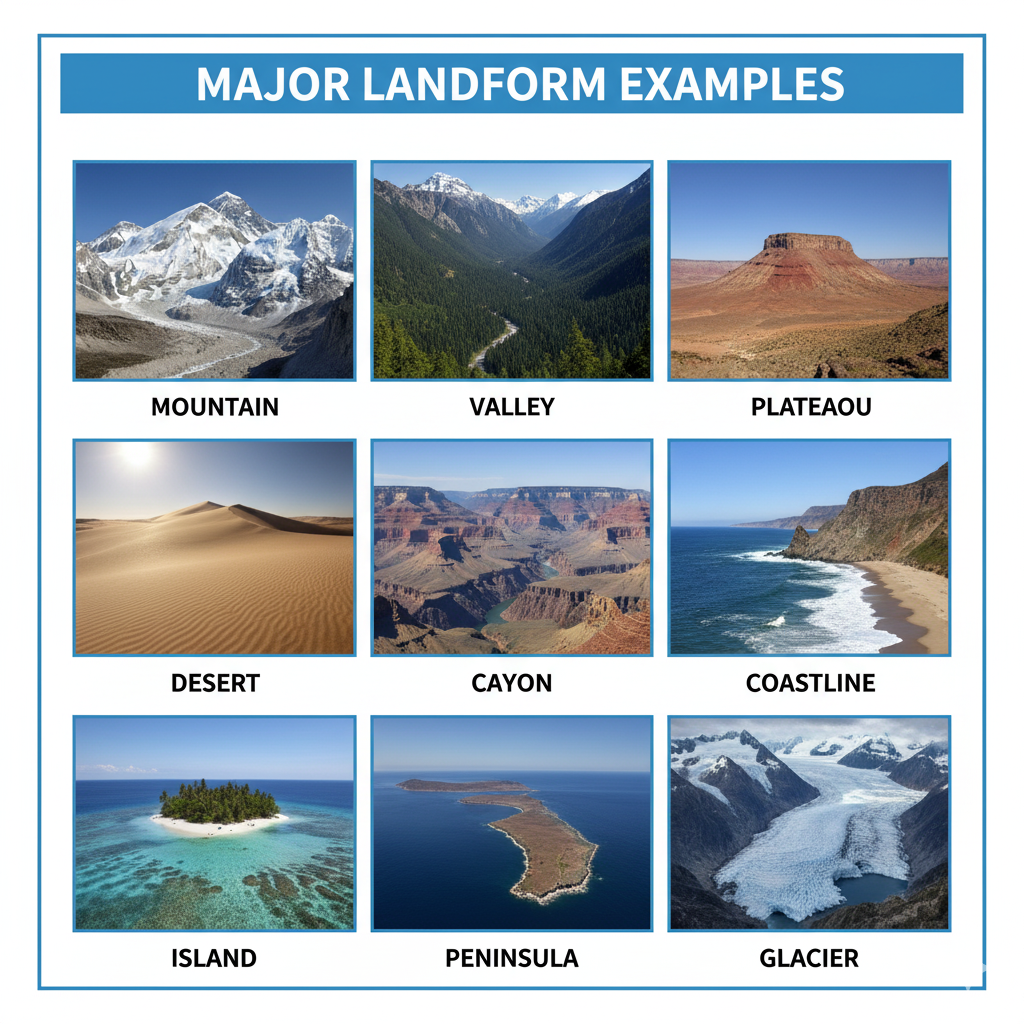
Major and Minor Landforms
The Earth’s surface is a dynamic mosaic of different shapes.
1. How Landforms are Created
Landforms are physical features on the Earth’s surface. They are created by powerful forces over millions of years.
• Internal Processes: Movement of tectonic plates and volcanic activity push up land to create huge features like mountains and hills.
• External Processes: Erosion by wind and water wears down land, carving out smaller features like river valleys and gorges. A great local example is the Abbay Gorge, which is about 1000 meters deep in some places!
2. Continents and Oceans
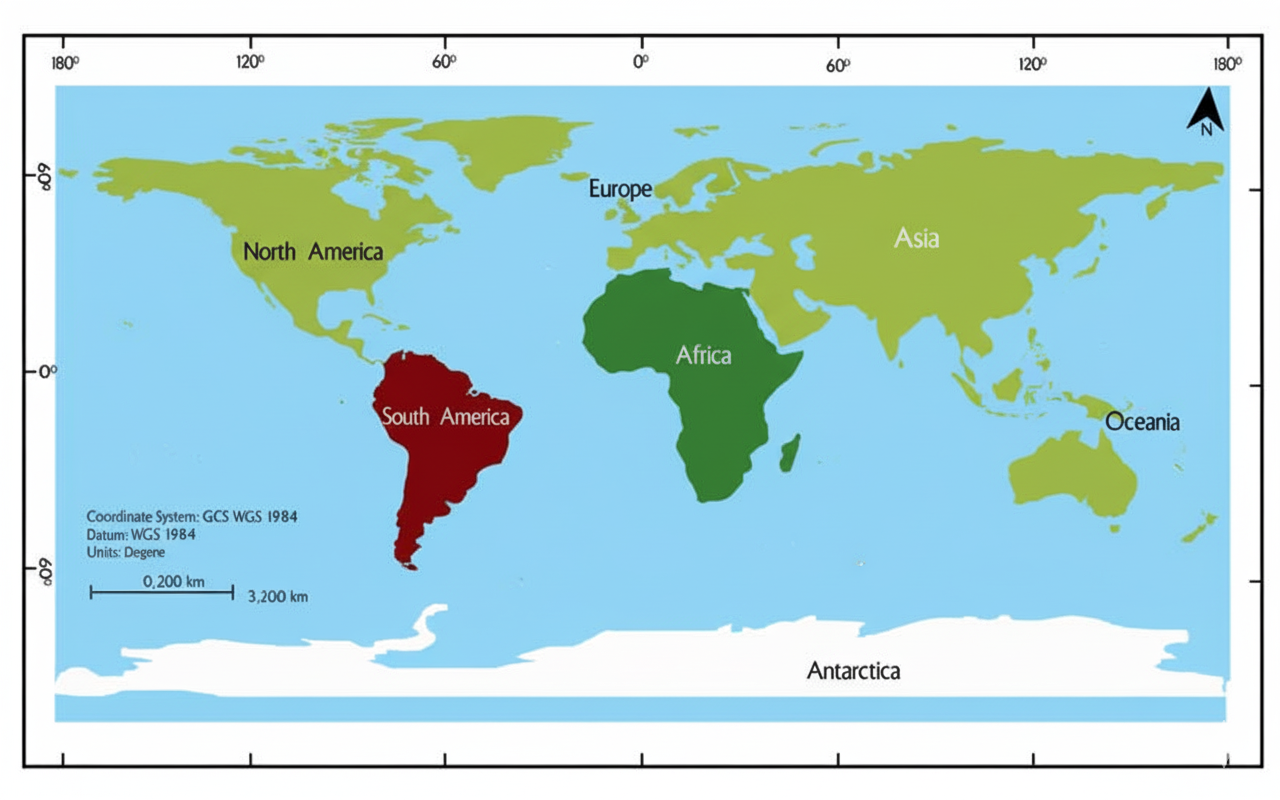
Our planet’s surface is divided into giant landmasses and vast bodies of water.
• Continents: There are seven continents, which are the largest landmasses. From largest to smallest, they are: Asia, Africa, North America, South America, Antarctica, Europe, and Oceania (Australia).
• Oceans: These are huge areas of salt water that cover 71% of the Earth. The five oceans are the Pacific, Atlantic, Indian, Southern, and Arctic. The Pacific Ocean is the largest and deepest.
3. Coastal Land Features
Where the land meets the ocean, unique features are formed.
• An island is land completely surrounded by water (e.g., Greenland).
• A peninsula is land with water on three sides (e.g., Italy).
• An isthmus is a narrow strip of land connecting two larger landmasses (e.g., the Isthmus of Panama).
The Major Landforms of the World
I. Mountains
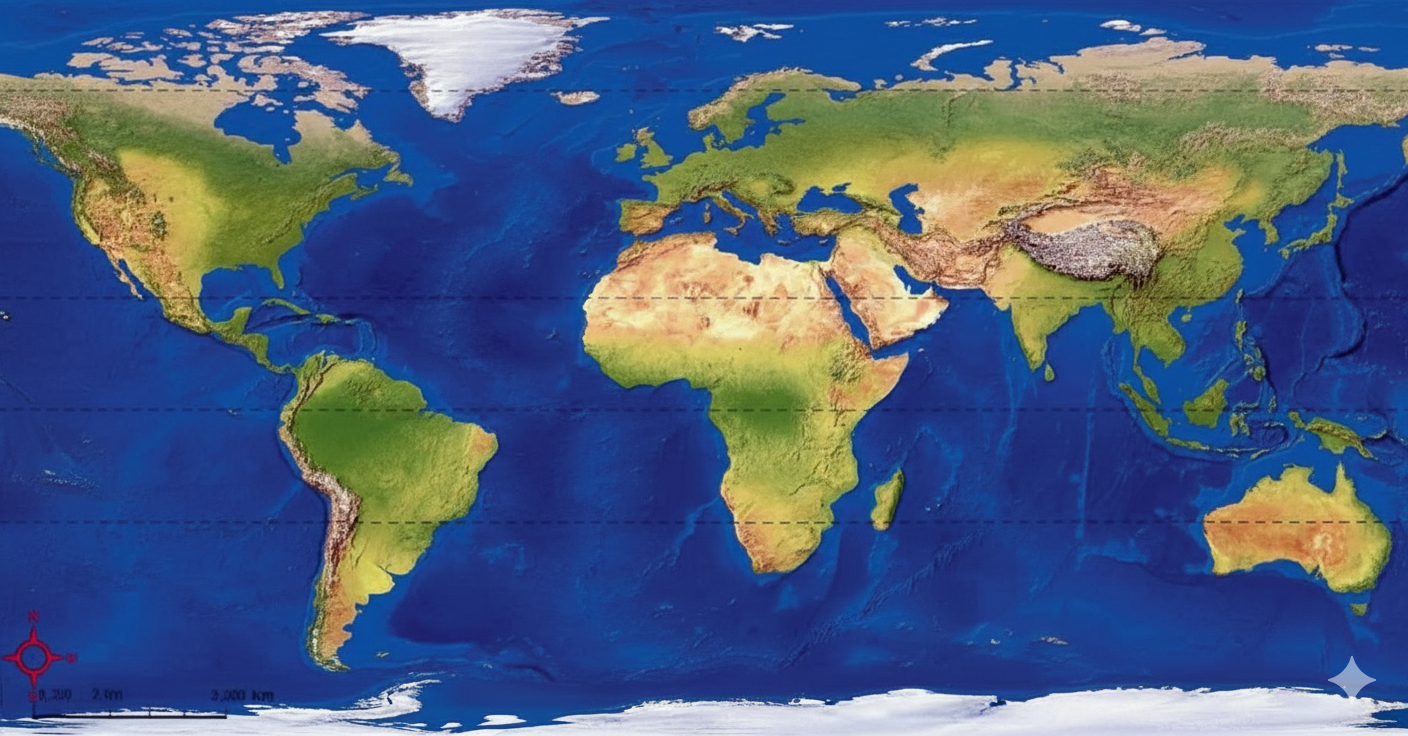
These are the largest elevated landforms with steep sides and high peaks. They can be formed by tectonic plates colliding and pushing land upwards, like the Himalayas, home to Mt. Everest (8,849m), the highest point on Earth.
II. Plains
Plains are large areas of flat, low land with no hills. They are very important for farming and raising animals. The Great Plains in the United States is a famous example.
III. Plateaus
Plateaus are large, raised areas of land that are flat on top. Sometimes magma pushes the land up from beneath without breaking the surface, forming a plateau.
Illustrations: The World’s Surface
Lesson Summary
• Landforms are Earth’s physical features, classified as major (mountains, plains, plateaus) and minor (hills, valleys).
• They are formed by internal processes (tectonic plates, volcanoes) that build up land and external processes (erosion) that wear it down.
• The Earth’s surface is 71% water (5 oceans) and 29% land (7 continents).
• Mountains are high with steep sides, plains are large and flat, and plateaus are elevated and flat on top.
• Coastal features like islands, peninsulas, and isthmuses are shaped by the interaction of land and sea.
Competency Checklist
Check the boxes below to confirm what you’ve learned.