
English: 7th grade 14 Sections44 Lessons365 Days
2.1. Listening and Speaking Lesson
The Ethiopian Calendar
English Seventh Grade
Lesson Competencies
At the end of the lesson you will be able to:
Listen for and explain specific details about the Ethiopian calendar.
Understand the main ideas in a listening passage about historical calendars.
Collect information about local calendars and speak about it in a few sentences.
Correctly pronounce the consonant sounds [f] and [p] in different words.
Key Terms
Calendar
A system for organizing days, weeks, months, and years.
Leap Year
A year with an extra day (February 29th in Gregorian, a 6th day of Pagume in Ethiopian).
Pagume
The 13th month in the Ethiopian calendar, having five or six days.
Coptic Calendar
The ancient Egyptian calendar which heavily influenced the Ethiopian calendar.
Pre-listening Activities
Dear learners,
How do you know what day it is? Or when your birthday is? We use calendars! Most of the world uses one type of calendar, but Ethiopia has its own special and ancient one. Today, we will learn about it.
Brainstorming
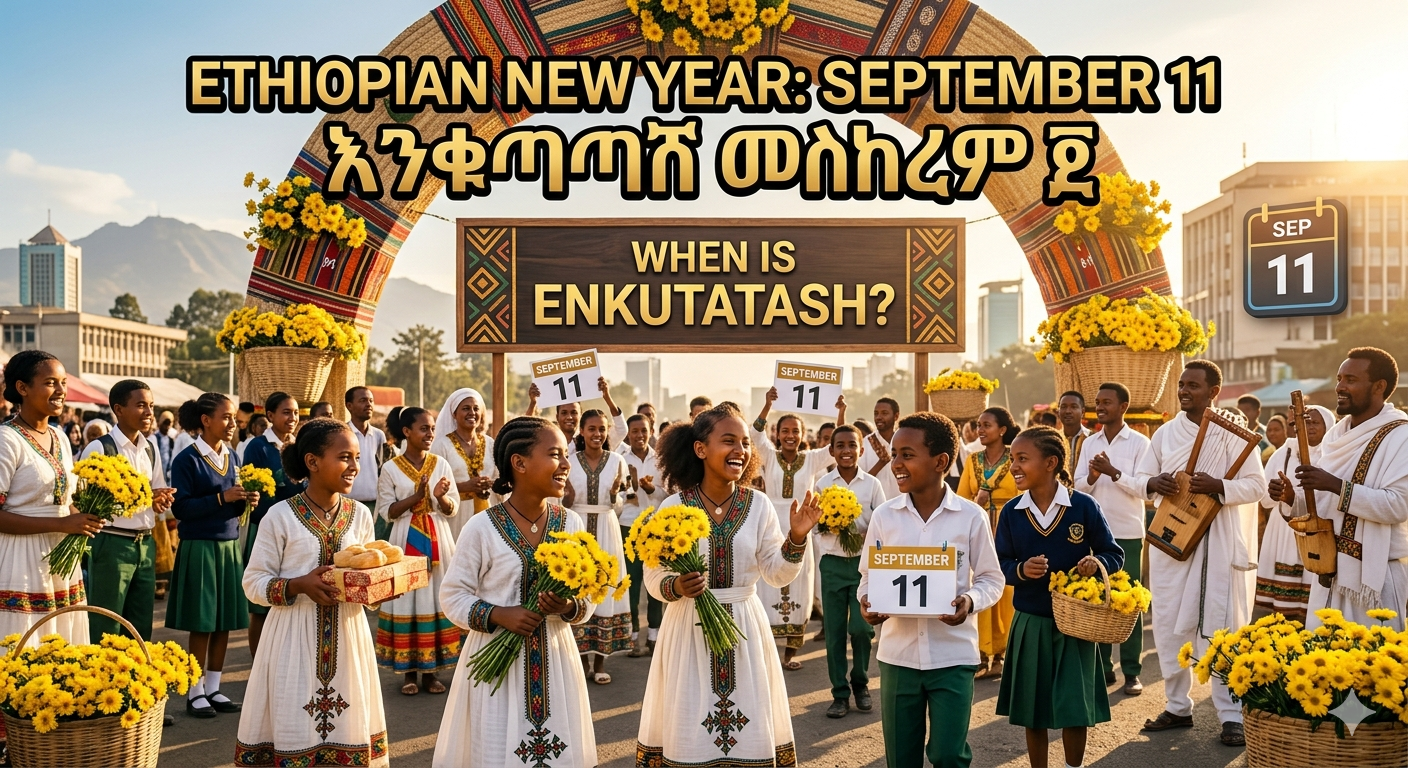
Think about the Ethiopian calendar. How many months does it have? What is the name of the first month? Discuss with a partner.
While You Listen
You are going to listen to a short talk about the Ethiopian calendar. As you listen, try to find the answers to these questions:
- How many months are in the Ethiopian calendar?
- Which ancient calendar is it based on?
- What is special about the 13th month?
Listening Practice
Listen to the passage about the Ethiopian calendar and answer the questions.
Listening Script:
“The Ethiopian calendar is unique and has a long history. It is based on the ancient Coptic Calendar from Egypt. Unlike the Gregorian calendar which has twelve months, the Ethiopian calendar has thirteen months. The first twelve months each have exactly thirty days. The thirteenth month, called Pagume, has five days in a normal year and six days in a leap year. This system makes Ethiopia a country with thirteen months of sunshine. The new year, called Enkutatash, begins on Meskerem 1, which is usually September 11th in the Gregorian calendar. This special calendar is an important part of Ethiopia’s culture and heritage.”
Speaking Practice
Practice speaking about calendars and pronouncing the sounds [f] and [p]. Press the microphone to record your answer for each prompt.
Lesson Summary
The Ethiopian calendar is based on the ancient Coptic calendar and has 13 months.
The 13th month is called Pagume and has 5 or 6 days.
It is important to research and talk about different local calendars to understand our culture better.
The sounds [f] and [p] are different. [f] is made with your top teeth on your bottom lip, while [p] is made by popping your lips open.
Final Assessment
Listen to the new passage and answer the questions.
Assessment Script:
“The main difference between the Ethiopian calendar and the Gregorian calendar is how they calculate the year of Jesus’s birth. This difference means Ethiopia is about seven to eight years behind the Gregorian calendar. For example, when it is the year 2023 in Europe, it is 2015 in Ethiopia. Furthermore, the new year is different. The Gregorian new year starts on January 1st, a cold time for many people. But the Ethiopian new year, Enkutatash, starts on Meskerem 1st, or September 11th. This is a happy time in Ethiopia, after the long rainy season, when the fields are full of yellow flowers.”
Competency Checklist
Check off each competency as you master it: